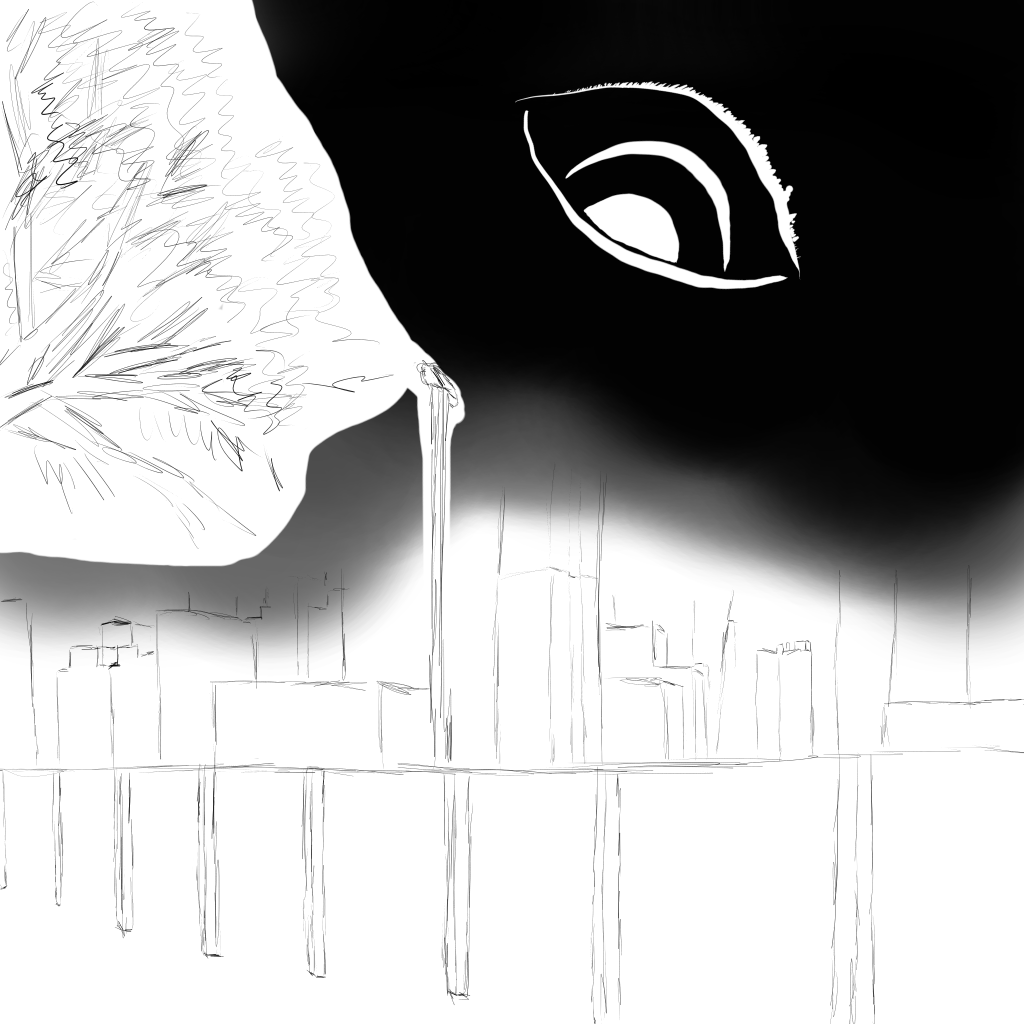
Potato is yum.

This is a reference to chapter 19 of my book on Royal Road… oh wait! You don’t know about my book?Hah! You should read it!
https://www.royalroad.com/fiction/117862/fool-in-space
Check it out if it seems interesting.

This is just a test before I work on my next animation. So probably no cool new things until this animation is done. I’ll send some quick comics over the next few days though.

This took a long time… but I figured out how the smoothing tool works so now my drawings should look much cleaner! Was great practice.

I figured I may as well try some animation so here goes nothing.

Ohhhhhhh I’m blinded by the light
In the past few decades we’ve seen a surge in popularity for stories that portray evil from a morally gray standpoint. We look back on Thanos and see how the portrayal of his actions are for some grand cause that the antagonist believes in. The only reason we root against the antagonist is because they are well, the antagonist. Similarly, we look at many other stories and see the perspectives of villains portrayed as upholding some cause that they thing is noble. Stories are made as a mirror to reality. Is every evil gray?
One of the most common examples used against Hedonism is Ted Bundy. Bundy is an infamous serial killer that murdered, raped, mutilated, and more countless women during his life. Any reasonable person would look at Bundy and say that he is evil. But, when we get into Bundy’s head he blames the world and says he is just doing what makes him feel that hit of euphoria. Does this make Bundy morally gray simply because he gets off by doing horrible things? Obviously not. No sane person would judge Bundy as gray. So then why does Bundy’s story from his perspective sound so similar to that of the morally gray villain? What is grayness?
For a start, it’s really difficult to even define the term morally gray or what I’ve referred to as grayness. The debate over morality has been going since the dawn of man and is something I will try to avoid in this post. For now, let’s go through common traits of grayness in media and explain why this has nothing to do with morality or evil. If anything, grayness means nothing.
The first common idea for grayness is the idea that “the villain has a point about some injustice.” The issue with this is that the story is not about good versus evil but a clash of ideologies which is a much more nuanced debate and deserves a different framework for deconstruction. If they have a point, that still doesn’t change the fact that they are doing bad things. A consequentialist would look at this and scoff since the intention to resolve some injustice forgets the cost to resolve the injustice. Is it fair for the majority to bend over backward for a minority? No, not really, that’s the wealth gape. Is it fair for the majority to bully the minority? Also no. Thus a line must be established even if it is a fuzzy line. And at that point, the story is no longer a story on grayness but a story about the line between clashing ideologies.
The second common idea for grayness is the “Has some good some bad.” This almost makes it seem as if functional humans aren’t evil. Ted Bundy was a fully capable man that seemed perfectly normal up until the years where they were caught. Some good some bad does not have anything to do with morality. In fact, this debate of what good and bad even entail and if they are traits or not is literally what philosophy aims to figure out. A character that is gray with some good and some bad is just another human. Flawed.
The last idea for grayness I’ll talk about is the framing. It’s all about the framing. If Ted Bundy wrote an autobiography, would you then call him morally gray? He had a noble reason for killing the women! It was for his happiness! It’s not his fault he’s like this! It’s because of society and our flawed education system! It can’t be Bundy’s fault that he screwed up! Right? Yeah. Any sane person would look at this argument and shed a tear for Bundy’s futile attempt at justifying his atrocities. But the issue is that from Bundy’s framing, he is gray. He is not evil. So what does this mean? Framing a character like Thanos as some honorable self sacrificing saint would change the whole meaning of the movie. We look at Thanos and say he is gray but is that really the case? Is Thanos really gray or is it the way the movie has framed Thanos that makes him seem gray. Is the world as perfectly balanced as Thanos thinks?
Grayness assumes the intension to do good is paramount and almost as important as the results. Even a slight look at consequentialism would rip apart any notion of grayness from villains. And, a villain doesn’t have to be gray. Why can’t we have a villain like Bundy? It’s not like people don’t want to read about a serial killer.