Potato is yum
Potato is yum.
recent posts
Fun stuff (Coming soon)
-

A finger creature walks a hand creature as a god watches them.
-

Though, I still use word because it works right out of the box. But anything complex? You bet I’m using LaTeX.
-
A lil funny guy… I might make this a recurring thing… maybe. I’m quite enjoying myself.

-
Rock Paper Scissors Shoot!! oh wait… oh no… that can’t be good…

-
No advice I have ever heard for anything in my life is a perfect blueprint for the topic at hand. No advice. I stick by this opinion and will die on this hill. I will now explain why I choose to die on this three word hill.
The foundation of advice is another human’s experience. Is that other human me? No. Are they like me? Probably not. So why do I listen to advice? Because it’s helpful? Because they are successful, they must be doing something right? Let’s first get this whole thing straight. When I say advice what do I mean? When I say follow advice what does that mean? This laying down of framework is vital to the understanding of my argument so stick with me. We’ll get to meat and potatoes soon. So I define advice as the essence of one human’s experience that they believe, key phrase they believe, would aid other humans in excelling at something. I also believe that people give advice (good or bad) for their own personal benefit. A scholar aids a fellow scholar to help further their field. An artist helps a fellow artist to form a connection to potentially grow greater reach. A business helps another business to aid in developing their market for a more sophisticated product. So when one follows advice, I take it as someone using this blueprint made by another person and following it as closely as possible.
Now, there are multiple things wrong with following advice closely. First is the motive for telling advice. Nobody gives something at a loss. One might say “but a generous person would give without thought.” and to that I would respond that they lose material value but gain value that we can’t measure which is personal satisfaction. By exercising that virtue of generosity they still aren’t losing out and us outsiders see it as a loss because our calculus doesn’t value virtue as strongly as them. From this perspective, advice is not from the goodness of the heart. Advice is purely for personal gain. This might seem like a cynical view of it but I want to point out that the virtuous person will often make the gain of others part of their own gain through subjective and unmeasurable means. As such, I don’t label advice givers as selfish since the selfish person wouldn’t have the character of generosity. I have given a few examples for how people gain from giving advice and these are just small examples to get your brain thinking. Next time you hear someone giving advice, ask yourself, “why give the advice?”
The second reason is that the giver is not you. Their human experience cannot fully translate to you meaning you cannot apply their blueprint blindly like the follower would do. A simple copy and paste of advice would invalidate the need for development or internalization of the topic leading to the follower being incapable of developing the topic further as they are not living someone else’s life experience. Advice is a gross reduction of another’s experiences. No amount of advice can replace the living of such experiences thus it is unreasonable to conflate following advice with experience.
Advice is not enough. The final issue with advice is that people often say “Do these things” without knowing much about you as a person. Your experiences. Your situation. They don’t know you. And likely, they don’t care to know you that deeply. They wish to know you deeply enough for their benefit (depending on the character of the giver) but nobody wants to know that you peed in your bed at the age of 7 and cried to your father in the middle of the night (why are you staring at me like that? Not me. I swear.) When someone gives advice it is general. It is not tailored towards your lived experience but their own personal lived experience. As with the second reason, they are not you. This makes advice inherently flawed.
Flawed doesn’t mean useless. A poisoned drink is still a drink. It just takes a little processing and effort to remove the poison from the drink. So, how does one go about removing the poison? First of all, recognize why they wish to help you. The reason of, “they are a helpful person and take great satisfaction in helping a fellow human being.” is a great reason and is hopefully the reason you come up with. We take their motive into account to help with our calculus of how applicable their advice is to our life. Next, ask how their situation, career, ect relates to us right now? Did they publish a book that was a grand slam on the first hit? Did they struggle in the trenches for decades? Did they work a 9 to 5 being a desk for years before starting their company? What did they do? Why are they qualified to give you advice and do they know of what your life is like? Once you have judged all of these, the poison has mostly lost it’s potency and it is possible to drink the beverage with this antidote on hand in case the advice turns out to be harmful.
So… is this blog post poison? Yes. It is. Don’t take my word for it. In fact, I’ve never tried to make anyone believe the BS I spout here. I present my arguments and my reasons. My opinions change all the time. Why? Because I think about things. I love talking to people, thinking about things, figuring out how and why the world work. I like knowing. How can I live in a world I don’t understand?
-
So I always wanted to try and slap finger guns on random emotes. So uh. I’ve done it. The thinking emote with a finger gun in the left hand. The world is now a better place. Rejoice. This also made me think that I could potentially do some kind of comic strip to add to these little things. I’m considering it. They wouldn’t be long comics and I would spend at most 30 minutes a day on it. No more than that. so don’t expect anything crazy. I’m not a real artist after all. I just do this stuff for fun.

-
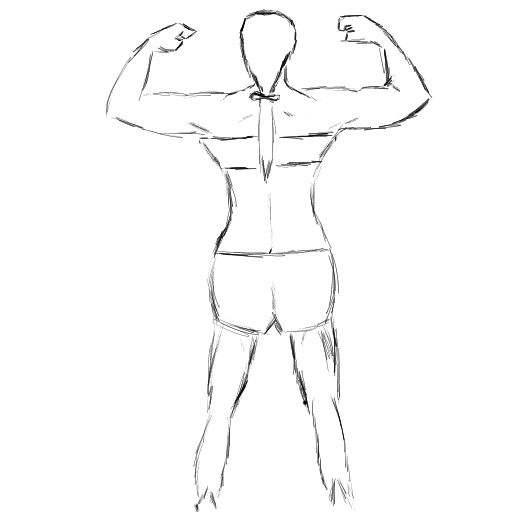
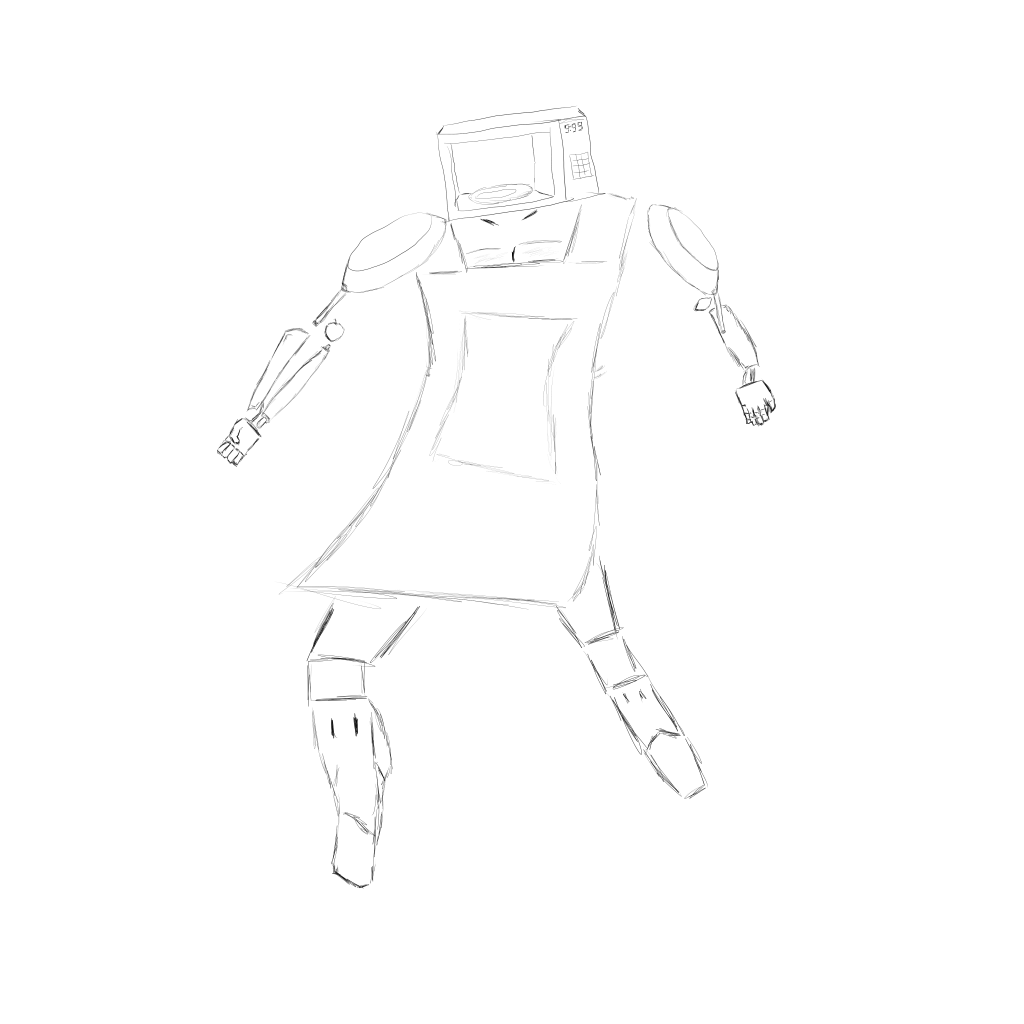
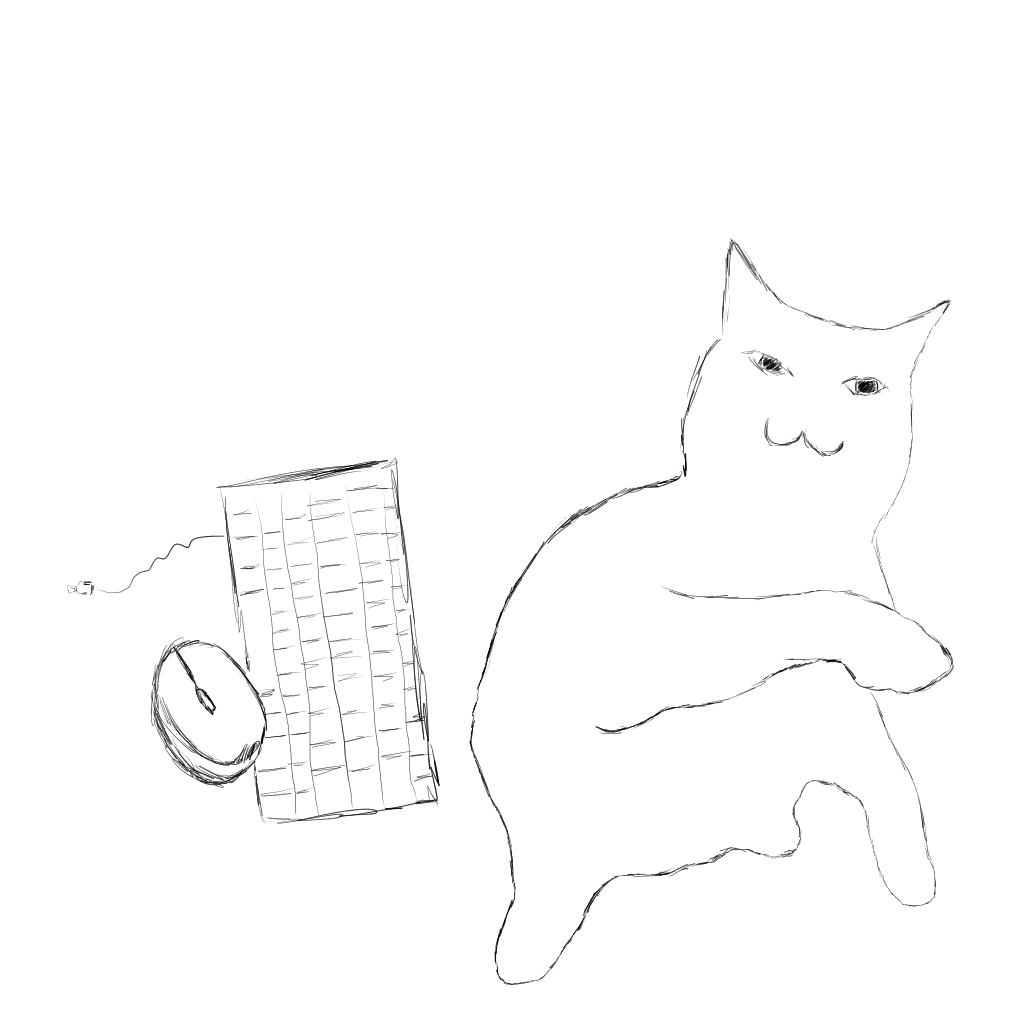
So uh. I wanna get good at drawing. So I’m gonna draw something small in a small amount of time every day. This is what I did today.


-
This… might be my most controversial post. Simply because I’m mentioning the word AI. But I’m going to attempt to present substantial evidence to explain why I have come to this conclusion.
So a lot of people have the thought that once the AI bubble pops so to say, the AI is gonna just magically disappear or something. This is… a dubious understanding of AI. When people hear about AI they think of it as something like crypto mining where it’s something that produces a product while a datacenter is churning through precious energy and coolant (often water). This is only half of the truth.
A simplification of AI is that it is simply an algorithm that takes in various inputs and then does something to it internally and then spits out an output. The idea that a model uses a lot of computing power is actually the exact opposite of the reason why AI has been developed. In fact, the purpose of AI is to reduce the computation necessary for tasks. This can be clearly seen when neural networks are used in pattern recognition for protein folding in drug discovery, particle classification in physics, and spell check in word processors. Without AI, the computer would need to calculate every possible outcome for each of these scenarios which ends up being an exponential problem that quickly becomes unrealistic to calculate. AI serves as a way to reduce this computation by reducing the complexity of a task.
This means AI is often not correct but it is close enough to be useful. The protein folding problem need not be perfect. It just needs to be good enough to show researchers results for promising leads. The particle classification need not be perfect as the experiments from detectors in particle accelerators have margins for error. A spellcheck need not be perfect as it assumes there is a human deciding if the spellchecker’s corrections make sense or not. The purpose for which AI was designed was to reduce computation, save resources, make things cheaper.
So… then how is AI eating up so much energy and draining so much drinkable water? The cost of training. The largest LLMs can run on a 4090 with pretty decent results. However, making the model that can take inputs takes a lot of energy to produce. Essentially, AI is like an imaginary factory in your computer that takes in some stuff and spits it out. The costly part is the making of the factory, not the running of the factory. It typically costs between 10k-100m to make the “factory” but it only takes 1k-5k to run said factory. So what does this mean? It means that since many factories have been made, the millions have already been spent. The factory exists and everyone can get it.
All it takes is someone to download their own factory and start using it just like when someone buys a factory except lots of researchers are just handing out their factories for free. Even if every company quit training AIs they have already have working models that won’t be deleted. These models can be used forever and at a fraction of the price that it took to compute their creation.
AI isn’t going anywhere and we’re gonna have to figure out how to live with it.
Sources:
Running an AI
- https://www.projectpro.io/article/cost-of-ai/1087
- https://hackernoon.com/how-much-does-it-cost-to-self-host-ai-i-built-a-system-to-find-out
Making a model